An NBC Information exit ballot additionally discovered that 56% of voters thought-about AI and information facilities a vital or main issue of their congressional vote.
Pellevoizin mentioned considerations about electrical energy costs, water consumption and the affect of Massive Tech have elevated public resistance to new amenities, whereas present mining websites could face fewer obstacles as a result of they already maintain energy contracts and grid connections.
In accordance with CoinShares’ second quarter Bitcoin mining report, grid connection delays now exceed 5 years for a lot of tasks, with amenities getting into service within the PJM area taking greater than seven years on common.
The report estimated that totally leased AI information facilities have been valued at roughly $27 million per megawatt in latest transactions, in contrast with lower than $3 million per megawatt for some publicly traded miners holding energized however unleased capability.
Nevertheless, changing mining infrastructure into amenities appropriate for AI computing can value between $8 million and $15 million per megawatt, making secured tenants and financing important.
CoinShares sees widening valuation hole between Bitcoin miners
Pellevoizin mentioned traders are more and more distinguishing miners with signed AI internet hosting agreements from corporations counting on future improvement plans.
CoinShares’ analysis discovered that miners with contracted AI or excessive efficiency computing capability traded at a median of 12.9 occasions ahead gross sales, in contrast with 3.7 occasions for miners with out contracts.
The excellence grew to become obvious following the midterm elections, when Bitcoin mining and information heart shares suffered sharp losses.
Cipher Digital fell roughly 20% final Wednesday, whereas Hut 8 declined round 23% and TeraWulf misplaced lower than 7%, in accordance with market information reported by Unchained.
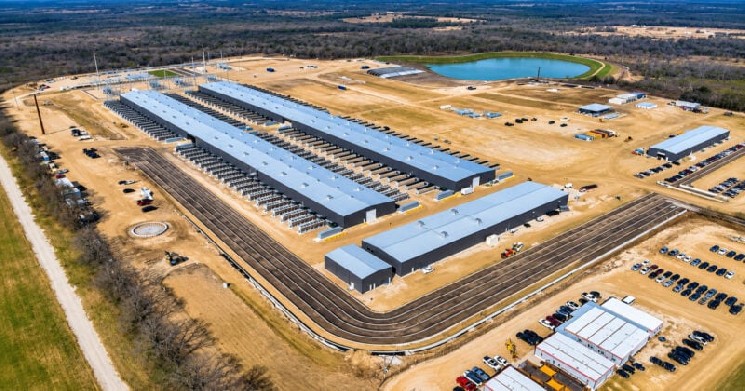
Riot Platforms, in the meantime, gained round 10% that very same day after asserting a $28 billion, 15 12 months AI information heart lease masking 910 megawatts at its Corsicana campus in Texas.
The election additionally raised questions on future development in Texas, the place Governor elect Gina Hinojosa has proposed pausing new information heart approvals till lawmakers set up further protections for electrical energy shoppers and native communities.
In accordance with Reuters, Goldman Sachs estimates that states dealing with potential restrictions account for roughly 45% of deliberate US information heart capability, with Texas representing a couple of quarter.
Analysts at US funding financial institution Jefferies estimate that roughly 13 gigawatts of introduced Texas information heart tasks may very well be in danger from tighter allowing guidelines, though present tasks with secured approvals could also be higher positioned.
Bernstein additionally lowered its worth targets on seven Bitcoin mining corporations by roughly 35% to 54% following the election, citing financing situations and uncertainty surrounding Texas information heart improvement.
Pellevoizin mentioned the market is more and more centered on how rapidly miners can convert their contracted capability into income.
CoinShares’ report recognized greater than $100 billion in disclosed AI and excessive efficiency computing backlog throughout coated mining corporations, in contrast with roughly $1.1 billion in annualized income.
Of greater than 4 gigawatts of contracted capability, solely round 550 megawatts had been producing billable income on the time of the report.
Core Scientific had roughly 437 megawatts billing by mid July, whereas rental funds at Cipher’s Black Pearl facility started in August.
CoinShares renamed its WGMI fund the Bitcoin Mining and Digital Energy ETF in August to replicate the rising overlap between Bitcoin mining, AI computing and energy infrastructure.
Pellevoizin mentioned the agency is watching modifications to state allowing guidelines, the tempo at which contracted capability begins producing income and the event of Texas grid operator ERCOT’s massive load connection queue.