Hyperliquid is decentralized, however geography nonetheless issues, as new analysis by Glassnode reveals merchants nearer to its infrastructure have a transparent pace benefit.
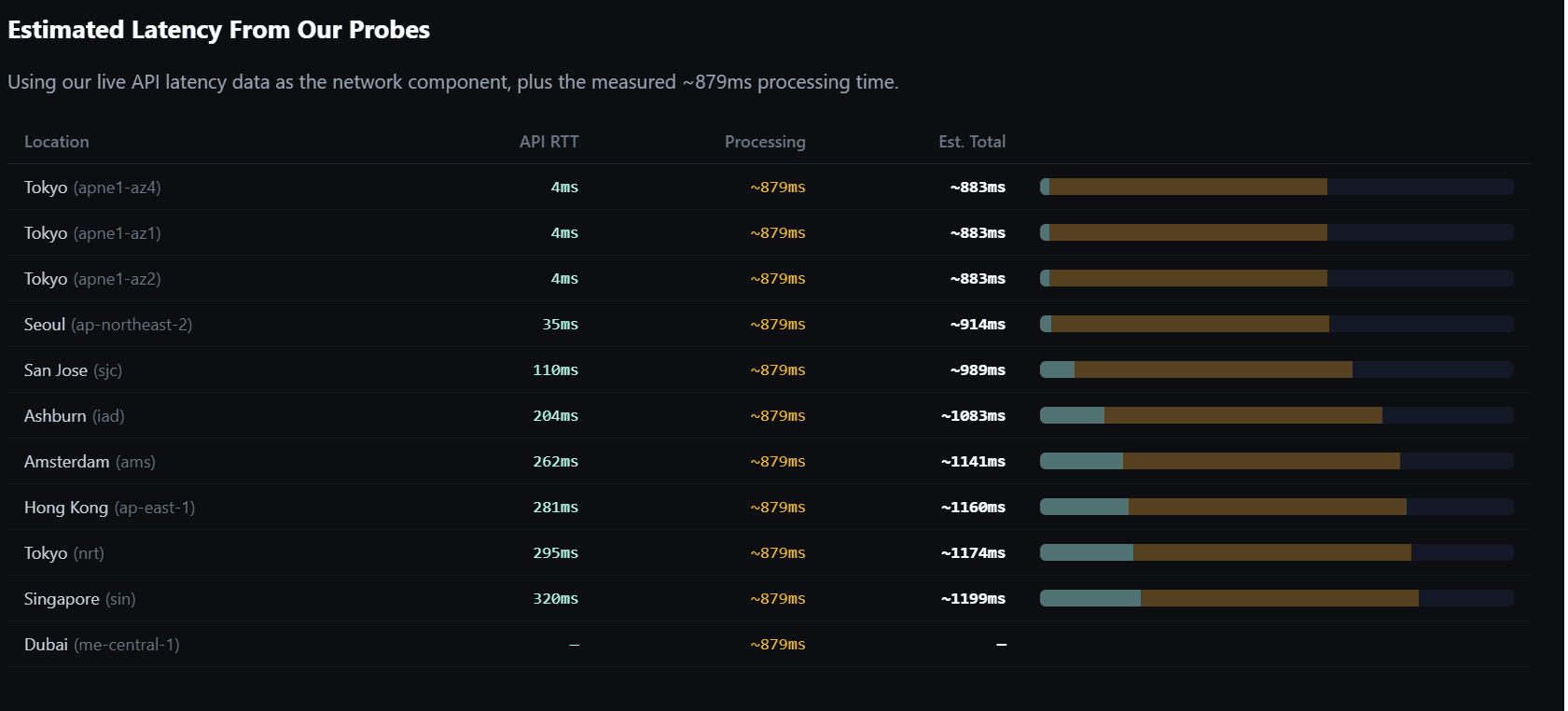
Trades from Tokyo-based customers can attain the protocol’s validators in as little as 2 to three milliseconds. That’s much better latency than European customers, who face delays exceeding 200 milliseconds.
That is as a result of Hyperliquid’s 24 validators are clustered in Tokyo, deployed throughout a number of availability zones in Amazon Internet Companies’ ap-northeast-1 area. The API layer routes by AWS CloudFront, however the validators sit in a single Japanese cloud area.
This reveals that whereas decentralized platforms like Hyperliquid protect core ideas of open entry, transparency, and the absence of centralized oversight to take away management asymmetries, pace and execution asymmetries nonetheless exist. So, whereas the market stays structurally truthful and permissionless, merchants with higher proximity to infrastructure can nonetheless have an edge, highlighting an inherent pressure between decentralization and equal participation in follow.
In a time-ordered system, geography determines queue precedence. A buying and selling desk in Tokyo can attain the matching layer tons of of milliseconds forward of rivals in Hong Kong, Singapore, or the U.S., securing a greater place, tighter spreads, and better fill chance.
Hyperlatency’s order-to-fill measurements put numbers on the hole. From AWS Tokyo, the median round-trip to put and ensure an order is 884 milliseconds, of which roughly 879 milliseconds is server-side processing and simply 5 milliseconds is community transit.
From Ashburn, Virginia, the full rises to roughly 1,079 milliseconds. The sting is about 200 milliseconds on a one-second fill, a margin that compounds throughout an change recurrently dealing with greater than $4 billion in day by day perpetuals quantity.
This analysis, nonetheless, is not with out its critics. One particular person on X identified that extra sophisticated order directions submitted from the Tokyo area can hit a roundtrip latency time of 400ms.
Tokyo’s function as crypto’s infrastructure capital shouldn’t be new. Centralized exchanges have clustered deployments across the metropolis’s AWS area for years, drawn first by proximity to Asian buying and selling circulate after which by a regulatory framework Japan constructed after the collapse of Mt. Gox.
At Token2049 in Singapore final 12 months, crypto executives described Tokyo as the middle of gravity for digital asset infrastructure in Asia.
“Japan had no regulation for a very long time, remember, that is the place crypto principally occurred, after which it went tremendous stringent, and nothing occurred for a very long time,” Konstantin Richter, the CEO of Blockdaemon, informed CoinDesk throughout Token2049. “However individuals stored on chiming away, and now they really have a regulatory infrastructure that is institutionally scalable and about able to pop.”
Richter stated his firm’s shoppers in Japan are prepared to pay for institutional-grade infrastructure.
BitMEX CEO Stephan Lutz put it extra immediately. “We have been in Eire earlier than … however it turned an increasing number of tough as a result of principally everybody besides the U.S. gamers are within the Tokyo knowledge facilities,” he stated.
The swap boosted liquidity by roughly 180% in BitMEX’s foremost contracts and as much as 400% in some altcoin markets, features Lutz attributed to the latency discount from being in Tokyo, not market-maker recruitment.
AWS Tokyo: crypto’s Mahwah
Hyperliquid shouldn’t be distinctive on this regard. Binance and KuCoin additionally run vital infrastructure on AWS ap-northeast-1.
An April 2025 AWS outage precipitated service degradation throughout a number of platforms, underscoring how a lot of crypto’s plumbing runs by a single cloud area and Amazon itself (knowledge reveals that round 36% of all Ethereum nodes are powered by AWS).
In conventional finance, exchanges neutralize this type of geographic benefit by design.
NYSE makes use of optical backscatter reflectometry in its Mahwah knowledge heart to equalize cable lengths to the nanosecond.
Deutsche Börse normalizes cross-connects to inside 2.5 nanoseconds. IEX routes each order by a 350-microsecond pace bump, 38 miles of coiled fiber, to get rid of proximity benefit.
Europe’s MiFID II mandates clock synchronization to 100 microseconds and externally audited cable-length equalization. These safeguards took a long time to develop. Nothing equal exists in decentralized markets.
For now, crypto merchants seem snug with that asymmetry. Hyperliquid has seen sustained progress regardless of its centralized infrastructure focus. However as processing occasions compress and institutional capital enters DeFi, the dynamics are clear: pace determines place, and place determines liquidity.
The latency arms race that reshaped Wall Avenue is arriving in decentralized finance. It runs by Tokyo.